

“Bon bini.” My eyes danced between the pristine Caribbean waters out the window and the map on the TV in front of me. Descending into Oranjestad, the capital of Aruba, I spotted Venezuela’s Paraguaná Peninsula, a speck of land 15 miles away. In that moment, I wondered whether that narrow stretch of water truly separated Aruba from Venezuela, or if something deeper kept the two lands apart.
Aruba’s history is shaped by the complex colonial history of the Caribbean and a distinctive identity fostered by the island’s inhabitants. After the Dutch arrived in the 17th century, Aruba became a principal exporter of aloe, gold and oil. Venezuelan oil from Maracaibo was transported to Sint Nicolaas on the island’s south side, where the Lago Oil refinery was soon constructed. In the early 1900s, Aruba’s Lago Oil refinery became a key transport hub for Venezuelan crude oil, creating alluring job opportunities for people throughout the Caribbean.
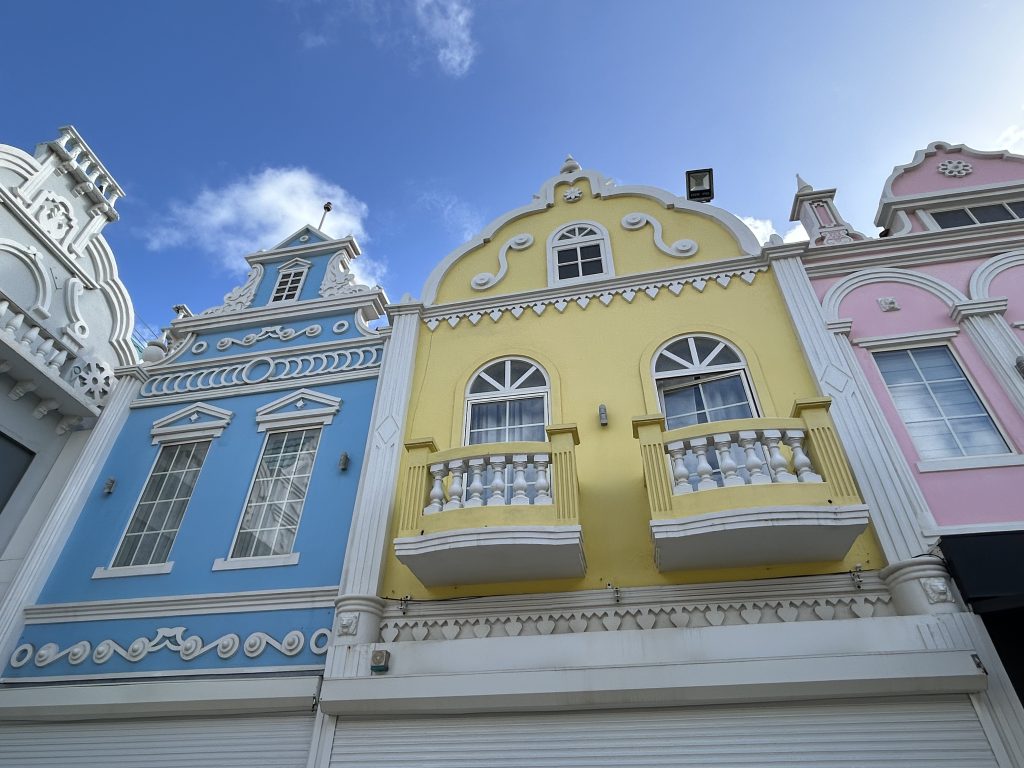
The refinery triggered a large wave of immigration to the island, turning Aruba into a melting pot of cultures, traditions and backgrounds. After the oil refinery’s closure in 1985, Aruba’s economy shifted toward tourism and has since become one of the most popular tourist destinations in the Caribbean. Currently, it is a constituent country of the Kingdom of the Netherlands, alongside its neighbor, Curaçao. Upon arriving, I noticed the myriad of hotels that sprawled across the western coast of the island, resplendent with casinos, bars, restaurants, and clubs. I was standing on EU territory, but it felt nothing like Europe. Cobblestone streets were instead cemented, arid heat from the Arikok desert enshrouded the towns, and the locals boasted a vibrant and relaxed work ethic. The vast ocean that separated Aruba from the Netherlands was more than water; it was a line where histories collided and Dutch-Caribbean identities were forged. The island was Dutch in spirit, but Aruban at heart.
During my visit in August 2025, the crisis in Venezuela was boiling. The U.S. had just deployed military destroyers to the Caribbean, and the naval presence in the region was rapidly accumulating. Although the infamous kidnapping of the Venezuelan president would not occur for another four months, the tensions between the U.S., its allies and Venezuela were reaching a tipping point. As I relaxed on the hotel’s beach, staring out at the sea toward Venezuela, I began to wonder how this Western-aligned island could sit so close to South America without conflict. As it turns out, conflict does ensnare the island; it’s just less apparent than I initially perceived.
Aruba maintains a crucial role in geopolitical relations, despite its seemingly petite size. When Venezuelan President Maduro came to power in 2013, his unstable monetary policy and attempt to nationalize industries led to Venezuela’s economic collapse, setting off one of the largest migrant movements in the world. Of the over 7 million impoverished Venezuelans who fled their homeland, an estimated 17,000 arrived in Aruba and another 14,000 in Curaçao. Although this number appears small, it represents over 16% of Aruba’s domestic population and accounts for a much larger percentage than in other nations affected by Venezuelan migrants. The influx of asylum seekers placed pressure on the island’s capacities, leading to crowded detention centers and widespread threats of deportation.
Aruba’s legislative body delivered a nuanced response to this wave of migration. In 2018, the local government established an International Organization for Migration office to support migrants arriving on the island. The group stressed the policies outlined in Aruba’s constitution to the visa-seeking migrants, outlining the three legal pathways to obtain asylum on the island. The first is applying immediately upon arrival with a migration officer (via land or maritime entry). The second is applying after having been on the island, with a waiting period of up to three months for a meeting with a Department of Integration and Management of Foreigners (DIMAS) officer. If the officer’s response is negative and the applicant does not leave the island, they will be incarcerated in an immigration shelter. This provokes the third option: applying for asylum while in an immigration detention facility. Regardless of the approach, no free legal assistance is offered, creating a financial burden that makes it difficult for the applicant to cover the legal fees required for their desired residency.
Another major complication for Venezuelans is the language barrier, which hinders asylum seekers from fully understanding and completing legal documents. Aruba’s governor is appointed by the Dutch king in Amsterdam; therefore, all legislation and documentation on the island is written in Dutch. Consequently, when migrants from Venezuela are presented with Dutch documents, they do not understand the language of what they are signing and the rights they possess, further complicating asylum approval by requiring a translator.
The “Happy Island” is not only affected by Venezuelan immigration but also by its military escalation. The offshore volatility beyond the seemingly calm blue waters remains ever-present, particularly in the latter half of 2025 during the U.S’s “war on drugs.” This campaign was characterized by deadly airstrikes on Caribbean vessels, amphibious assault ships dispersed in the region, and the deployment of American troops. Aruba is the host of a Collective Security Location (CSL) hub for the United States, a location that the government uses for aerial operations and counter-drug trafficking campaigns. Clearly, the United States is aware of Aruba’s geopolitical importance in the Venezuela conflict, as it has secured itself an entry point at the gateway to South America through the CSL.
After the unprecedented eruption of the U.S’s anti-drug trafficking campaigns in the Caribbean, the Netherlands and its Caribbean constituents faced a precarious stance regarding unintentional repercussions of military actions in the region. In January 2026, after the U.S kidnapped Maduro in Venezuela, a mass shutdown of Caribbean airspace led to over 60% of flights being cancelled in the region, resulting in thousands of stranded travellers. Although the airspace reopened a few days later, the strike demonstrated the fragility of the Caribbean’s tourism industry and how quickly it can be threatened. In Aruba alone, tourism accounted for more than 74% of the GDP in 2019 and employed 85% of the workforce, meaning there would be dire consequences if collateral damage were caused. As of the time of publication, Venezuela remains in a state of political limbo and is currently engaged in conversations with the U.S over its future and democratic transition.
The romantic, balmy façade of Aruba masks a crisis raging across the water in South America. An influx of migrants has strained the territory’s legal institutions and challenged their integrity. The United States’ determination to end Venezuela’s political regime has triggered violent strikes and military operations in Aruba’s Caribbean surroundings. Most importantly, recent events demonstrate the difficulty of maintaining political neutrality in a region subverted by an external conflict. Although Aruba’s unparalleled beauty remains imprinted in my passport and camera photos, I felt uneasy as I departed. The island is a postcard of calm, but just beyond its shores lies a reminder that geography can make even paradise a point of tension.